Italian Hams and Dutch Machinery – The Case for Intelligent Design?

Berkel Slicer Circa 1930
I was in Chicago last week and was having cocktails at Oseteria via Stato on a beautiful night. Behind the bar near a wood burning pizza oven, I spotted a vintage Berkel. For those not familiar with the Berkel, it is truly a functional work of art, very good at doing one thing: slicing meat very thinly. In the late 1800’s, a Dutchman named Welhelmus Adrianus Van Berkel worked as a butcher outside of Rotterdam. The guy was also very interested in engineering. Needing something to do in his garage at night, he set out to invent an automated meat slicer, and he was not willing to sacrifice quality for efficiency. After much trial and error, he created two innovations: a convex blade that simulated hand slicing and a moveable tray that precisely fed the meat to the blade. In the process, he created a beautiful machine.
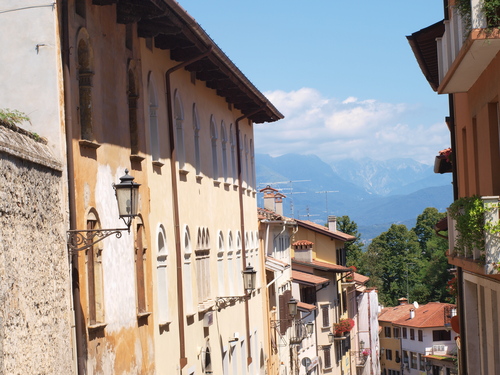
San Daniele
I got to thinking about how cool it is that this machine from 19th century Holland made it possible to improve on an Italian work of art that dates back to before Christ. That work of art is prosciutto (dry cured ham). True prosciutto uses thighs of very specific pork varieties. They are salted and left to age in the open air for 8 months. This is when the magic happens. The climate and natural surroundings help give the meat distinct character. For my favorite from San Daniele, the Adriatic Sea air filled with ocean fragrances blows up the Tagliamento river and mixes with the cold mountain air off the Dolomites. This creates a fairly dry climate with gentle winds which are ideal for aging meat. The meat is rich and luscious and has a certain sweetness as compared with hams from Parma. The heat from your mouth melts the fat and the flavor is awesome.
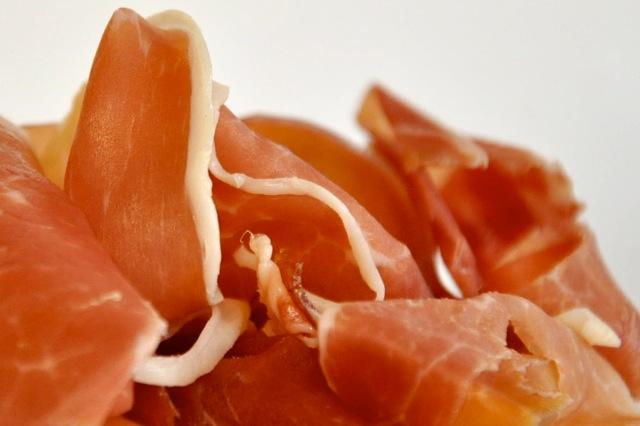
A gift from San Daniele
So where am I going with this? These ancient hams are absolutely best sliced paper-thin. There’s another challenge… the fat runs in strips and too much friction in slicing can cause it to melt. Enter the Berkel. The precise adjustment of the table allows for mega-thin slices and the convex blade reduces friction because the only part of the blade touching the meat is the edge. Coincidence, or was the Berkel crafted by divine decree to caress the beauty out of the Prosciutto? Either way, these two artisan products seem destined for each other, and the epicurean world reaps the rewards of the marriage.
Posted on May 28, 2011, in Food & Dining and tagged Berkel, Proscuitto, San Daniele. Bookmark the permalink. 1 Comment.

 Voyage d'un Bon Vivant
I think that your posts are inciteful, intelligent and intriguing. Thanks for sharing!